
Puno:
Beyond Lake Titicaca
This chronicle journeys through temples, artisan workshops, encounters with remarkable people, and sacred landscapes that reveal a land still waiting to be discovered—deeply authentic and rooted in the heart of the southern Andes.
Join Roser on a journey that unveils the deeper dimension of the Altiplano.
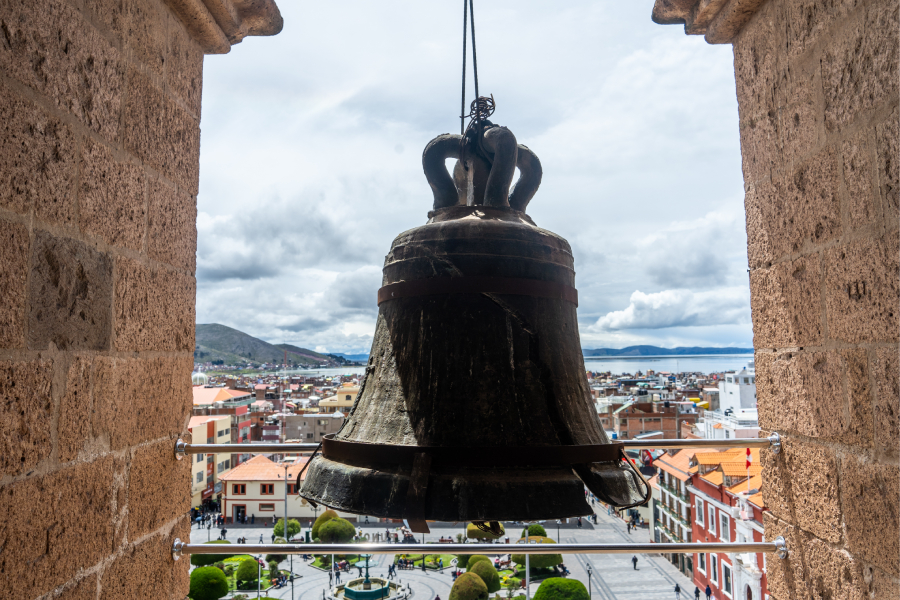
I arrive in Puno early in the morning. The city rests along the shores of Lake Titicaca, the highest navigable lake in the world. Tradition tells that from these waters emerged Manco Capac and Mama Ocllo, founders of the Inca Empire. Here, time seems to flow between the sacred and the everyday: this region is a land of syncretism, of deep devotion, and of celebrations where Andean worldview intertwines with colonial heritage.
Art, faith, and syncretism on the shores of Titicaca
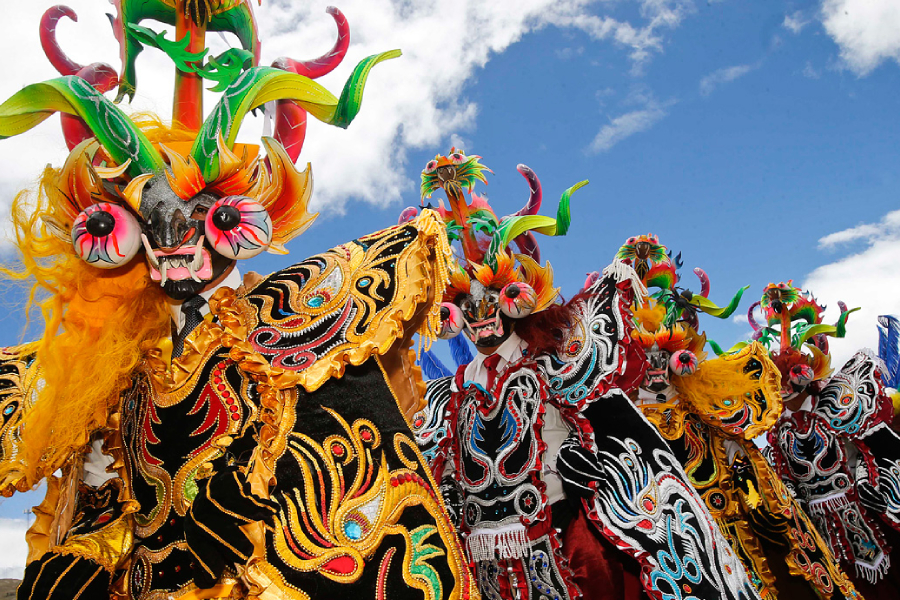
My journey begins by stepping into festive art, one of the pillars of Puno’s cultural identity. During a fascinating visit, an embroiderer of traditional costumes explains the intricate symbolism behind typical dances such as the Diablada and the Morenada. Through his words, I begin to understand that each garment reflects history, hierarchy, and collective memory. Later, a master mask-maker shares his astonishing work—which gives form to the cultural blending of the Peruvian Altiplano. Devils, archangels, and hybrid characters emerge from his workshop, their forms revealing the fusion between European imagery and Andean tradition.
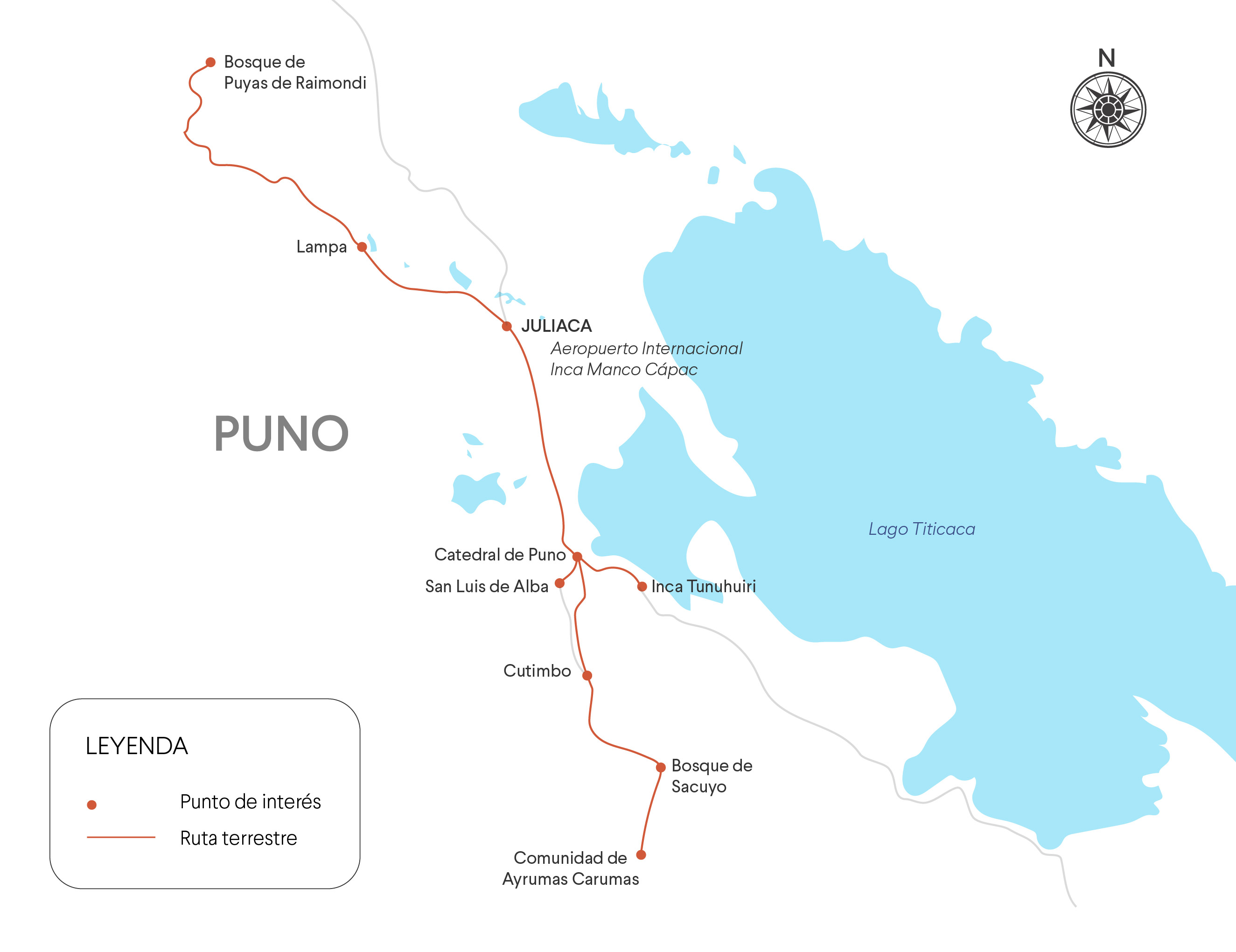
View full map
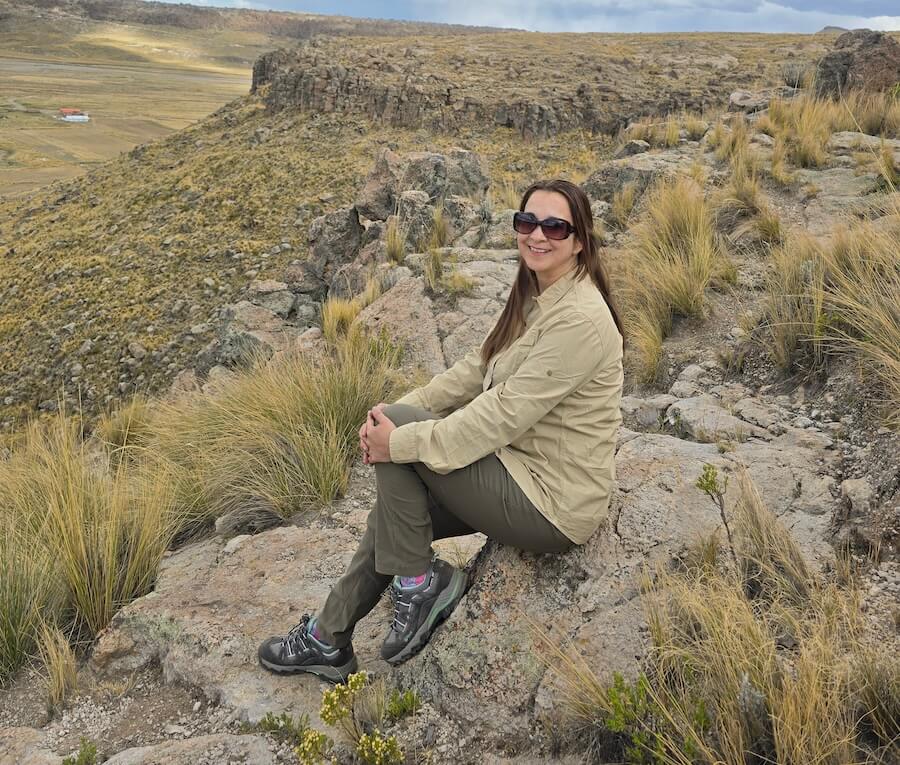
ROSER STRATER
Directora de Gestión de Producto
roser.strater@colturperu.com
The following day, we set out for Inca Tunuhuiri, one of the most enigmatic and least-known sites in the region. Located near the village of Ichu, this pre-Inca ceremonial center offers a majestic view of Lake Titicaca, which stretches before our eyes like a blue mirror between the mountains. The archaeological site preserves sandstone walls, anthropomorphic blocks, and terraces that suggest its ritual importance. Although its origins date back to the Pucara culture (500 BC–AD 400), it was later reused by the Incas. Even today, local residents perform offerings to Pachamama and the apus, keeping its mystical legacy alive.
Back in the city, a leisurely lunch prepares me for the next visit: San Luis de Alba, a 17th-century mining settlement that played a key role in the emergence of the city thanks to its silver production. Amid colonial remains and the vast landscapes of the altiplano, I discover how this precious metal attracted power, evangelization, and, above all, profound social transformation.
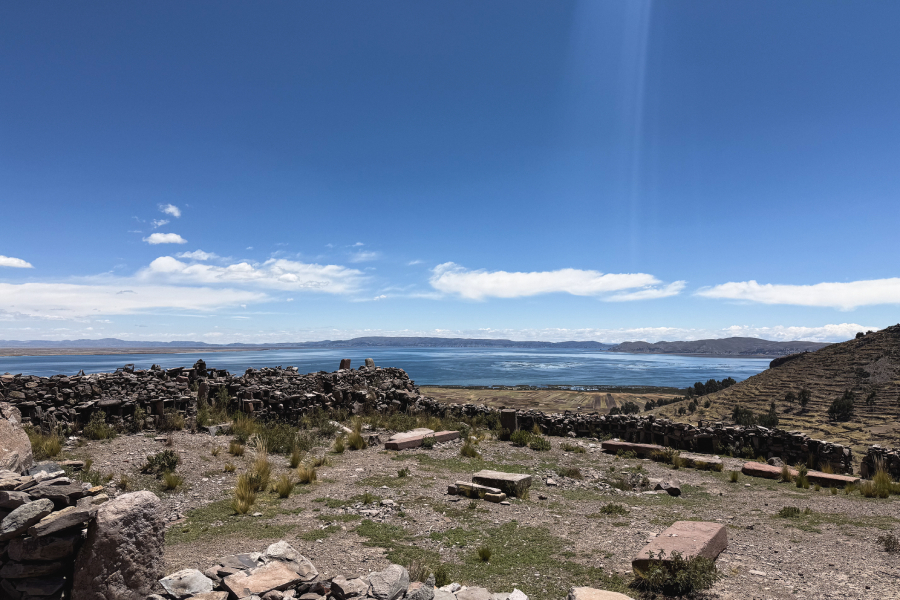
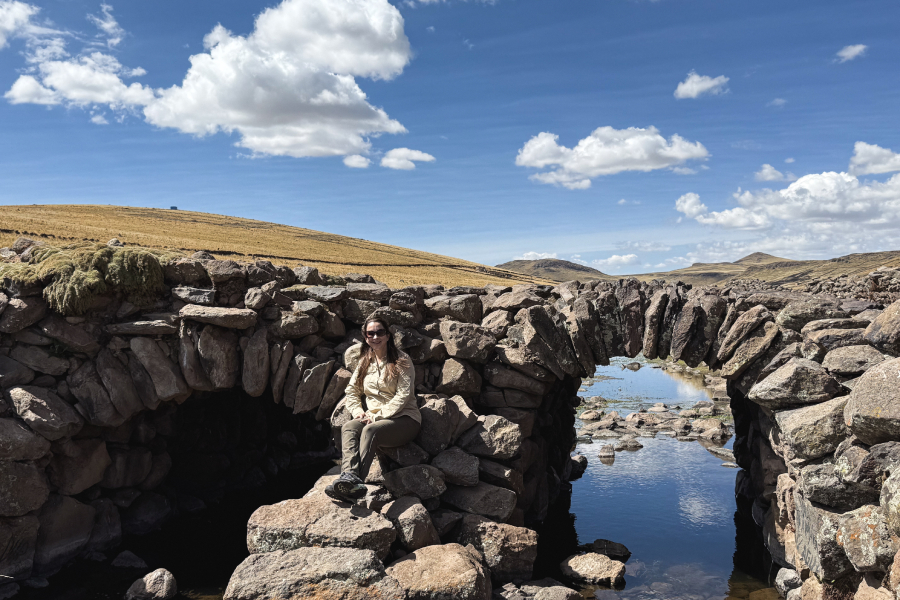
At dawn, one of the most complete routes of the Altiplano awaits—a journey that combines history, archaeology, nature, and living culture through a different lens. Our first stop is Cutimbo, an archaeological complex where the chullpas—prehispanic funerary towers built of stone—rise above an open, silent plateau. Many travelers associate the chullpas of the altiplano with Sillustani; yet in Cutimbo the experience feels different: more intimate, slower, almost private, as tourism here remains minimal.
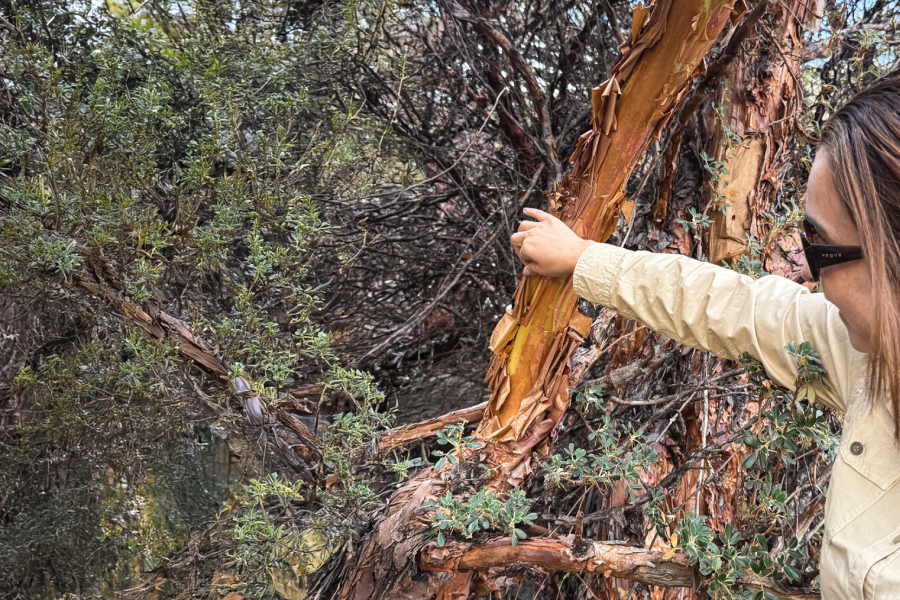
The walk to the summit takes 25 minutes and unfolds among queñua trees (Polylepis spp.), native to the Andes and known for thriving at elevations between 3,500 and 5,000 meters. Their bark peels away in delicate layers, as though the landscape itself were revealing its own memory. At the top, the view is extraordinary: imposing stone chullpas stand with remarkable precision against a vast horizon of mountains and sky. The powerful energy of the place—felt the moment one arrives—is amplified by the architectural grandeur of these crypts and their connection to ancient Andean cultures.
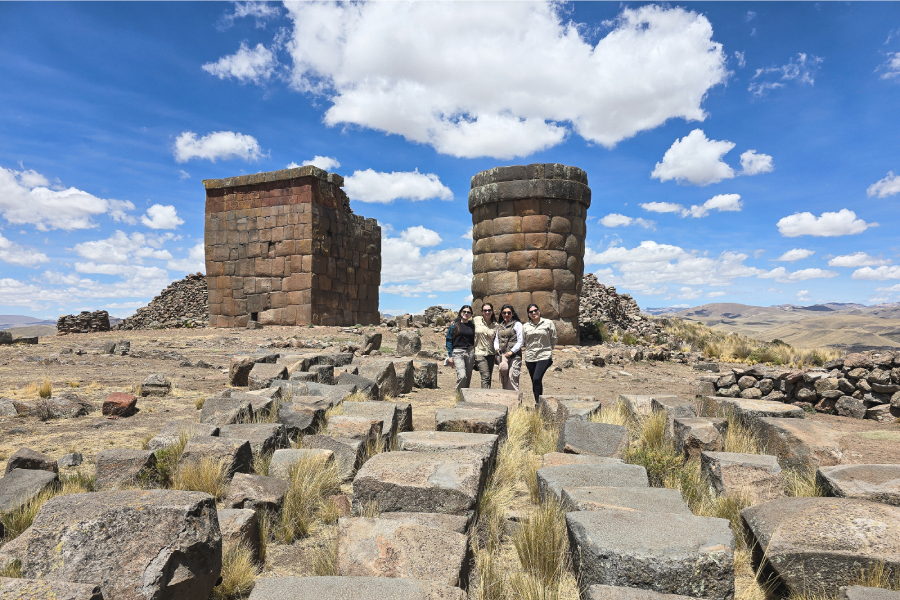
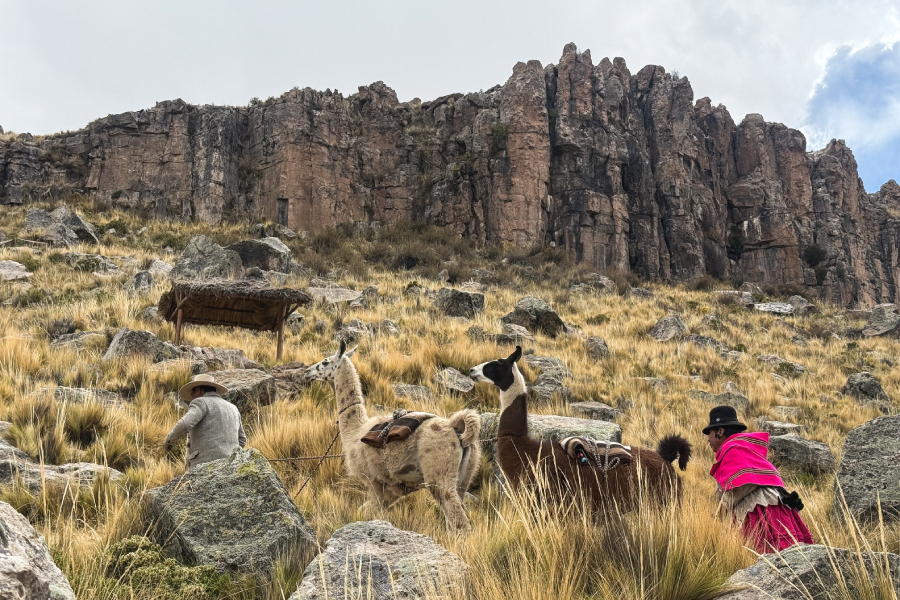
Yet the most moving moment of the day unfolds in the community of Ayrumas Carumas. Upon arrival, we are warmly welcomed and introduced to their traditional weaving techniques and the collective work they have developed as a community. This visit stands as a testament to how tourism can become a tool for genuine sustainability and impact.
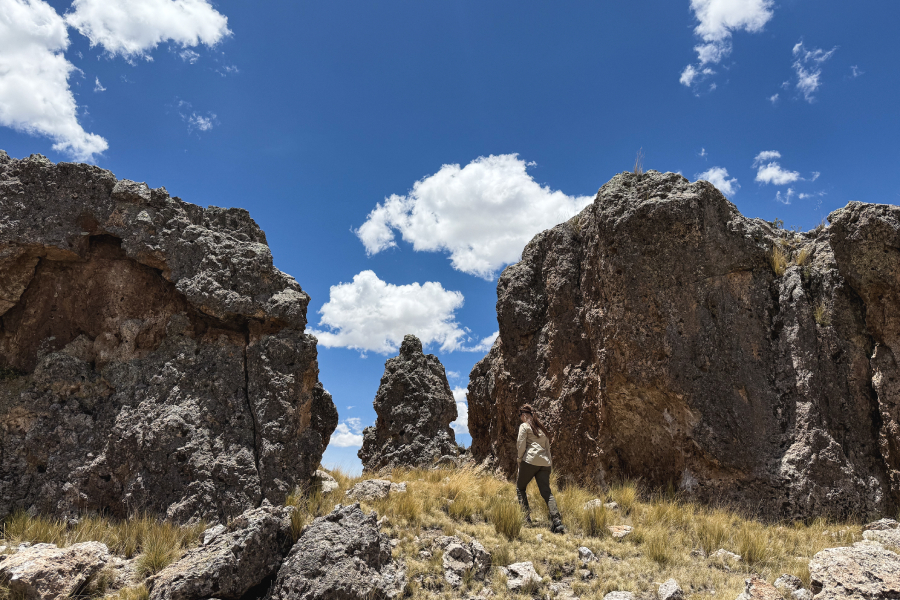
Together with community members—and a charming herd of llamas—we begin our walk toward the summit of Qawrani Tiyi, a sacred site located at the highest point of the community’s main mountain. To reach it, we pass through Quñuna, a narrow rock passage resembling a cave where tradition invites visitors to make a wish. From the summit, the landscape unfolds dramatically: vast cliffs and stone formations appear like sculptures shaped by centuries of wind and time.
On the fourth and final day, the journey turns toward the northwestern side of the Altiplano.
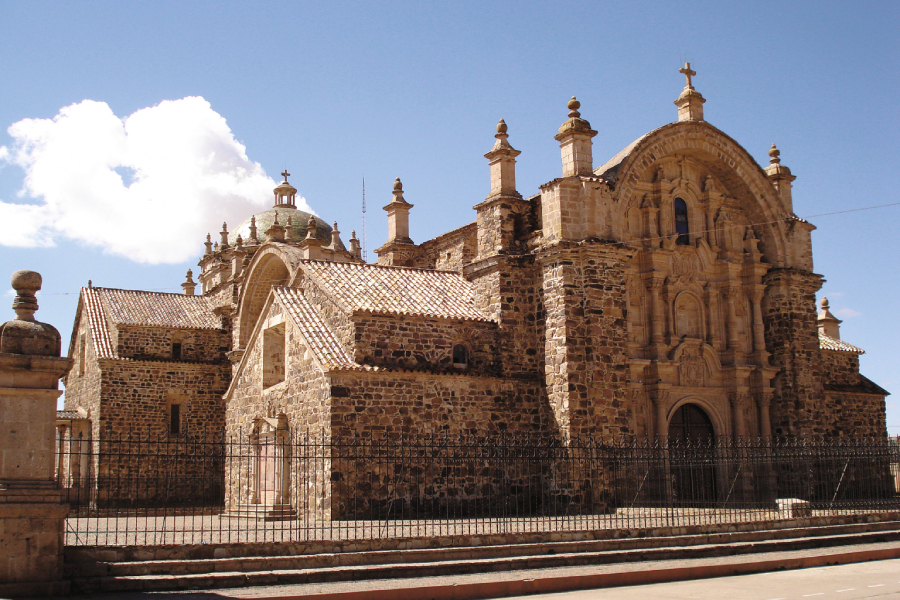
The first stop is Lampa, founded in 1548 and one of the most important centers of the region during the viceregal period. Its layout and architecture—built in pink volcanic stone—speak of the prosperity the town experienced between the 17th and 18th centuries. The visit begins at the Church of St. James the Apostle, built in the late 17th century and considered one of the most distinctive expressions of Andean baroque in southern Peru. The temple stands out for its use of local materials and its glazed ceramic roof tiles—rare in high-Andean architecture—which reflect the light with a distinctive brilliance.
Inside, altars and paintings connected to the Cusco School remain preserved, along with colonial catacombs. The church also houses a replica of Michelangelo’s Pietà, a detail that reveals how European artistic models traveled across oceans and were reinterpreted in the Andes, eventually becoming part of the city’s cultural identity.
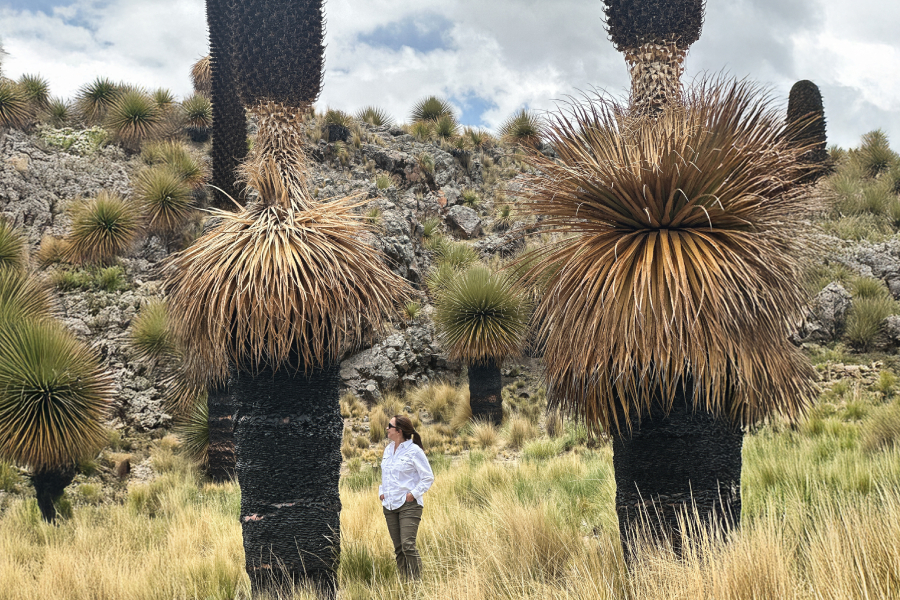
From there, the road leads to the forest of Puyas de Raimondii (Puya raimondii), an endemic species of the Peruvian Andes and the largest bromeliad in the world. It can grow over ten meters tall and produce an inflorescence with thousands of flowers. Yet what makes it truly extraordinary is its life cycle: it may take between forty and one hundred years to bloom—and it blooms only once before dying. In the Altiplano, this plant has long been seen as a symbol of resistance and patience—a living metaphor of the Andean world.
The Altiplano beyond Titicaca
As it is time to depart, I carry the feeling of having traveled through a land where different eras coexist without erasing one another. Here, the stone preserves memory, the lake whispers ancient myths, and every community lives tradition in the present.
Discover the wonders Peru has to offer your travelers.
Contact our destination experts. 