
Arequipa:
Land of volcanoes and condors
In the company of Carla Acosta, our North America Bespoke Journeys leader, we will explore the city and the impressive Colca Canyon, in search of new and fascinating experiences through which we will immerse ourselves in local history, living culture, exquisite gastronomy, and colonial architecture.
What we will discover is just a small sample of what Arequipa and its surroundings have to offer. Join us on this journey through the land of volcanoes!
My journey begins in the “White City”, known for its buildings made from sillar, the local volcanic stone that gives it its unique character, at 2,335 meters (7,660 feet). Its imposing volcanoes, which watch over the city like guardians, and Misti, majestic and serene, evoking in me the awe-inspiring might and splendor of nature.
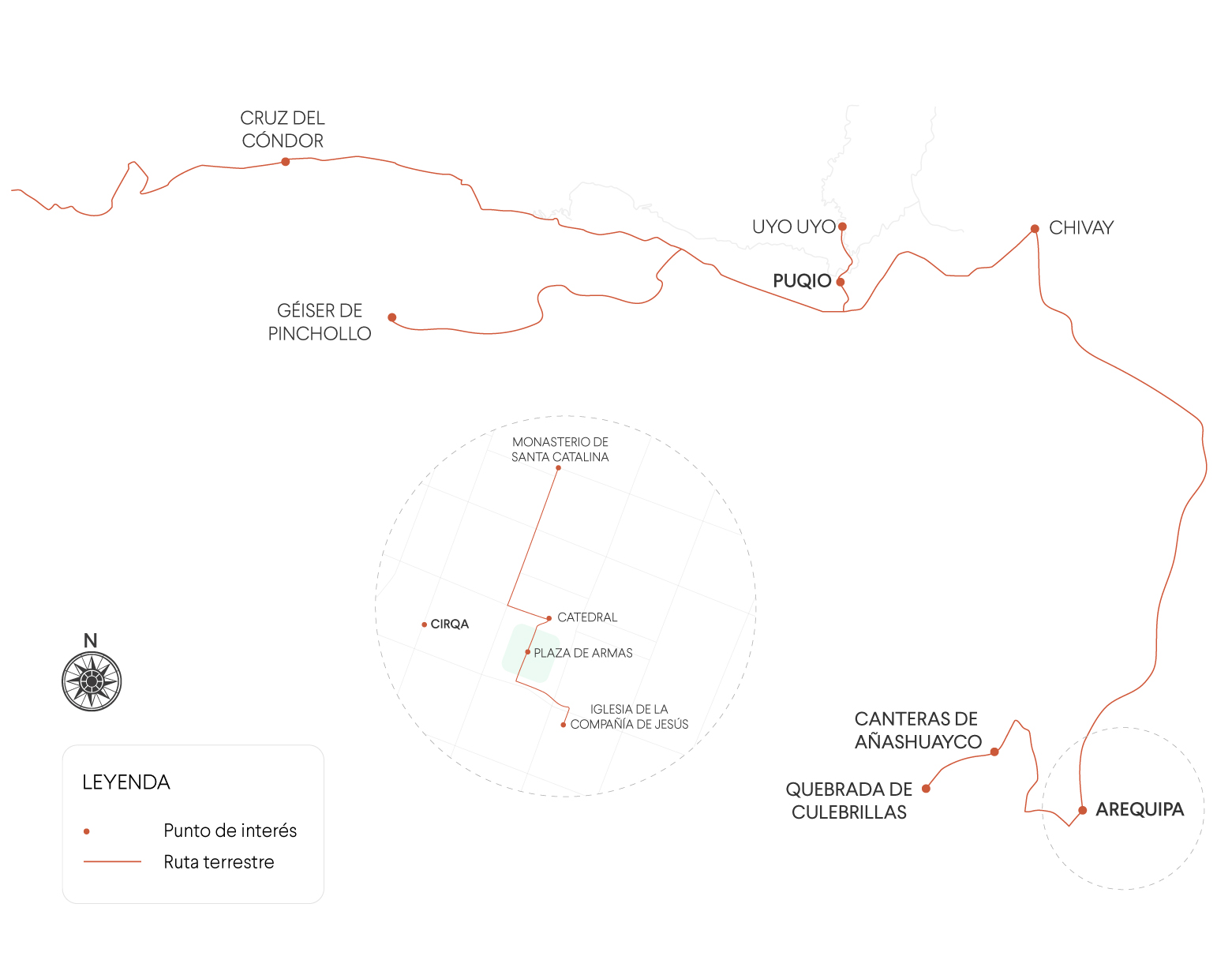
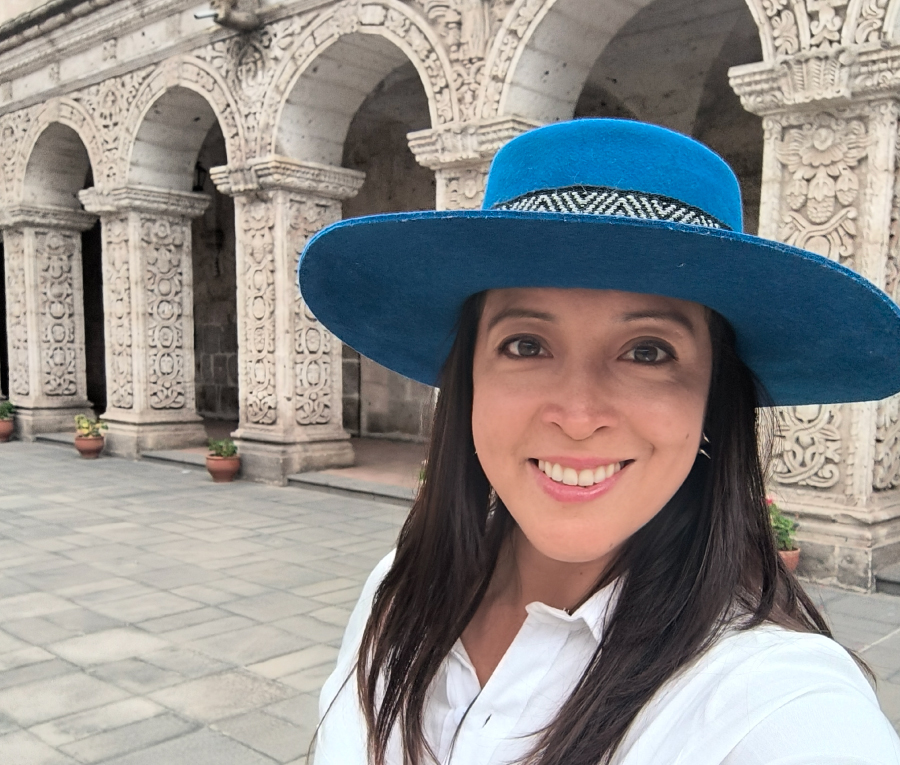
After walking through the main streets of the city, I arrive at Cirqa—part of the Relais & Châteaux collection—where I will spend tonight. This boutique hotel, with its traditional architecture and contemporary décor, was originally a small monastery founded in the 1540s.
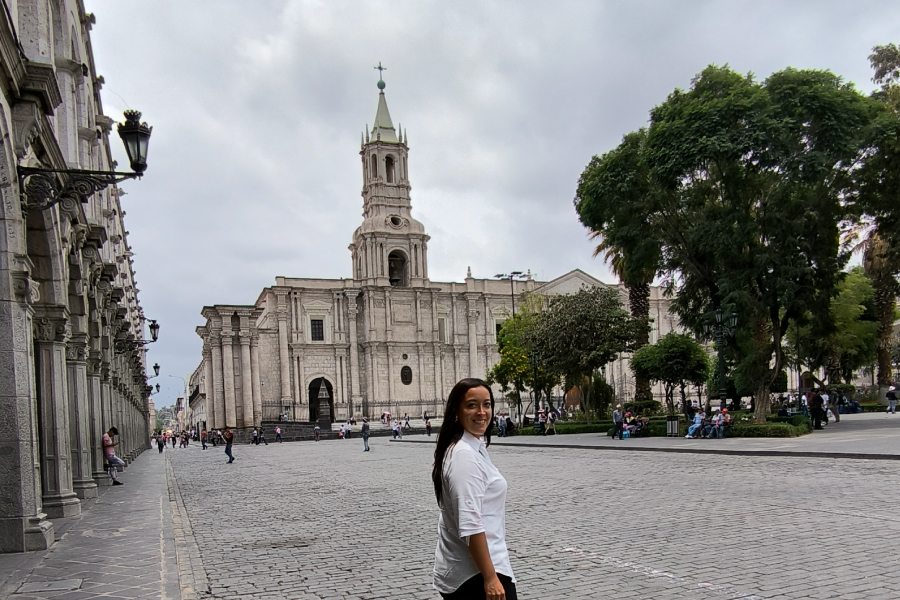
I set off for the Plaza de Armas, in the heart of the historic center. Here stands the imposing Cathedral. Built entirely of sillar, in a neo-Renaissance and Gothic style, it has seventy columns, two large towers and three main entrances. Also on the main square, I discover the charms of the Jesuit church, one of the most representative buildings of Arequipa’s architecture style.
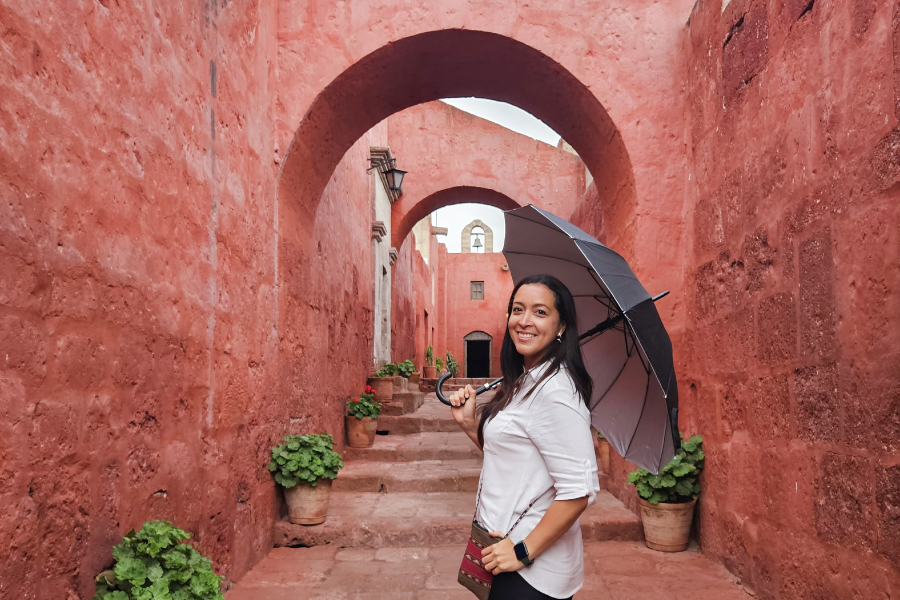
But Arequipa not only conquers me with its architecture and cultural heritage; the city’s delicious cuisine is also one of its great attractions. I allow myself to be tempted by the aromas that emerge from the traditional local restaurants known as picanterías, where the region’s most typical dishes are served. Stuffed pepper, spicy pork stew, shrimp chowder… every mouthful is a delight for the palate.
As I walk the picturesque streets of this colonial–style city, with a delicious cheese ice cream—one of Arequipa’s emblematic desserts—in my hand, I immerse myself in the unique atmosphere that has remained so faithful to its authentic origins.
When I arrive at the Añashuayco quarries, I find myself surrounded by the great walls of white stone that soar above us, silent witnesses to centuries of history and tradition. As I explore, I meet Fortunato, a quarryman who has been extracting stone from this site for more than 15 years, just like his father and grandfather before him.
With patience and dedication, he teaches me the secrets of his trade and invites me to put some of them into practice. I am impressed by his skill, but most of all by the pride he has in his work. Now I understand the meaning behind one of the city’s most famous sayings: “One is not born at the foot of a volcano by mere chance”. It is a motto that reflects the strength and passion which permeate the lives and activities of those who call this land their home.
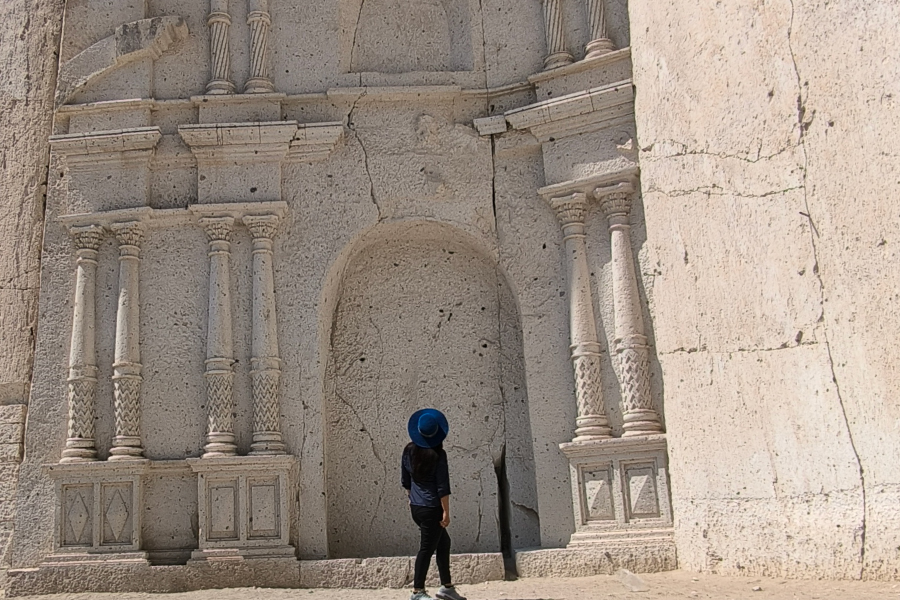
Alongside quarrymen like Fortunato, sculptors also work here, and they, too, share their art with visitors. A few meters away, I can see a series of figures, columns, and even a high portal, carved entirely by hand.
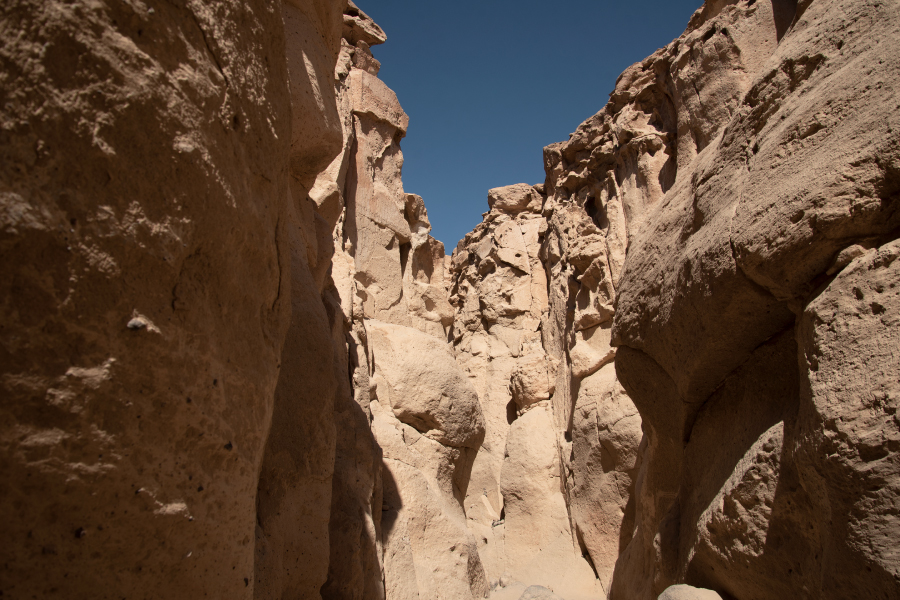
Minutes later, I arrive at the Culebrillas ravine. Here, the landscape is imposing, with walls of white stone soaring skyward and narrow pathways that wind between them. With every step I take, I admire the natural and historic beauty of my surroundings, which include around thirteen groups of petroglyphs.
Something that catches my attention are the apachetas. It is a local tradition to assemble these cairns, made from stones placed one on top of the other, and to offer them to Mother Earth or Pachamama as a sign of respect and gratitude. I stop in front of one of them, and feel how much history there is behind it.
I say goodbye to Culebrillas, excited by the adventure and ready to continue my journey towards the imposing Colca Canyon. With a depth of 4,160 meters (13,648 ft), it is considered one of the deepest canyons in the world and a must-see destination for lovers of adventure and nature.
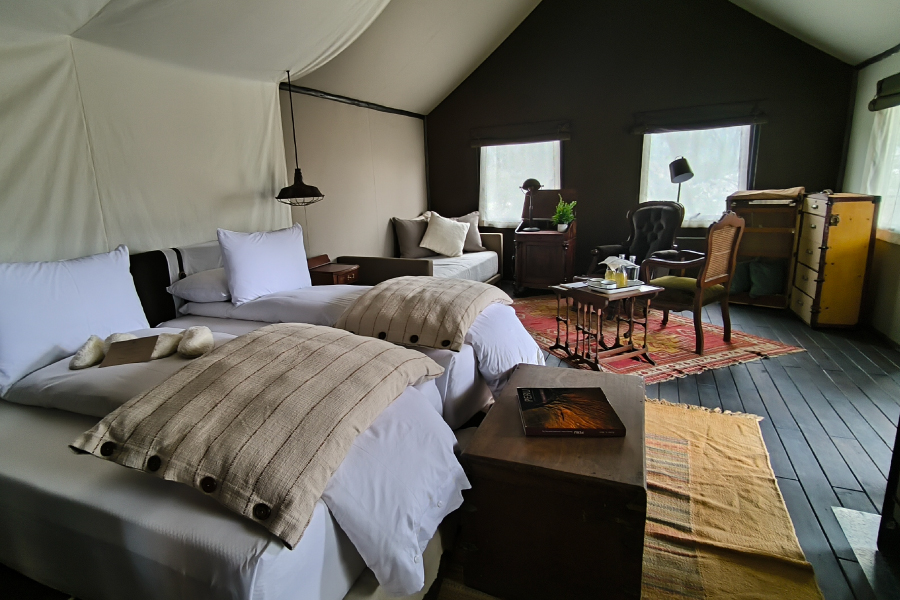
Before the sun goes down, I reach Puqio, a refuge composed of elegant little houses and tents, in the heart of Colca. From the terrace of my room, I enjoy a panoramic view of the valley as I savor a cup of muña tea, a native plant known as the mint of the Andes. I am ready to immerse myself in this unique experience and connect with the local culture that this cozy hotel has in store for me.
Colca is renowned for its restorative hot springs, and so I end my day with a relaxing bath, in preparation for tomorrow’s adventure.
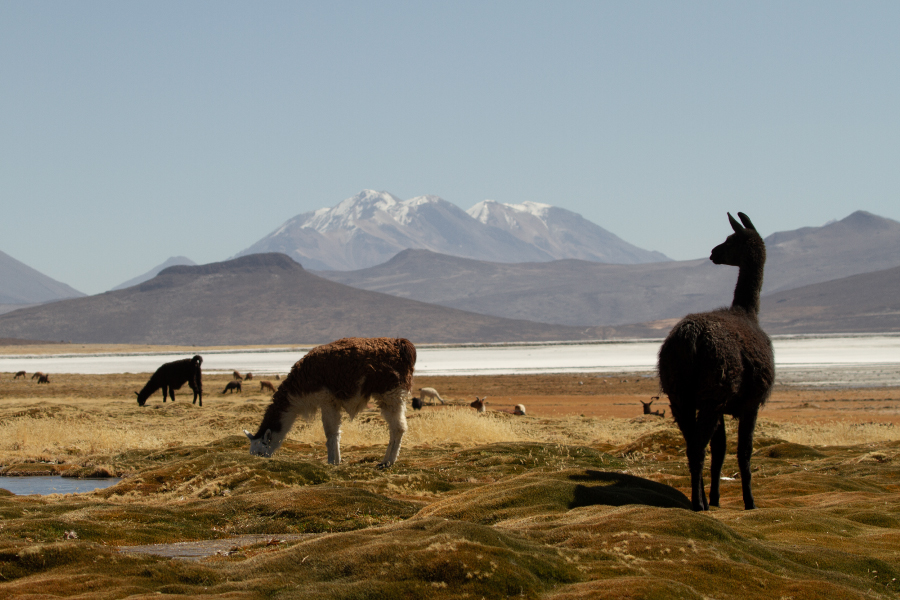
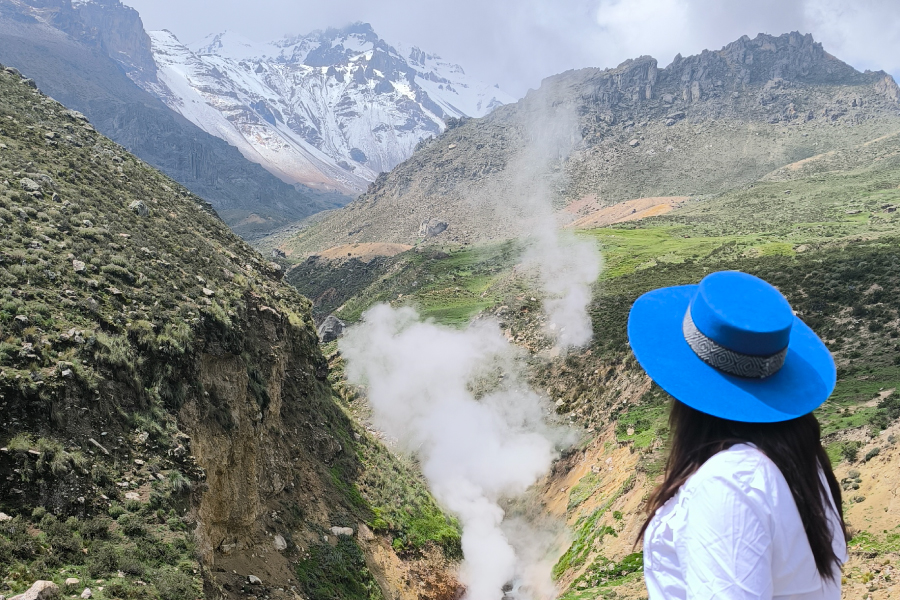
When I arrive, I am impressed by the imposing jets of water and hot steam that shoot up from the earth. Amid all the excitement of witnessing this natural wonder, I find myself compelled to pause and admire the snow-capped peak of the volcano. Suddenly, three condors come into view, welcoming me to this magical place. The sight of their majestic and elegant flight is an experience that will remain engraved in my memory forever.
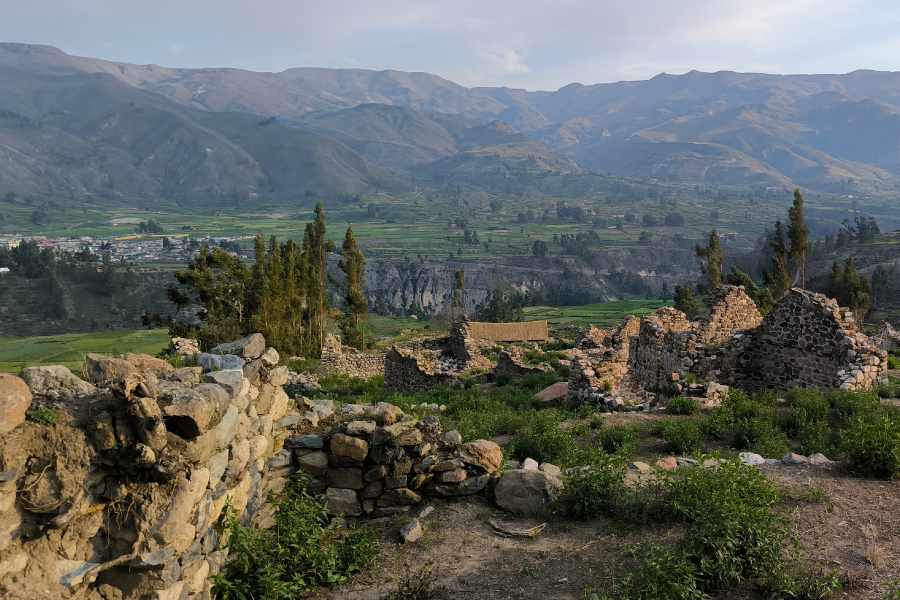
In the afternoon, I set off on a short walk to the Uyo Uyo archaeological site. This small citadel, built by the Aymara-speaking Collagua people, is a living testament to the rich culture of the region. From here the best views can be enjoyed, especially when the golden evening sun bathes the landscape in orange tones.
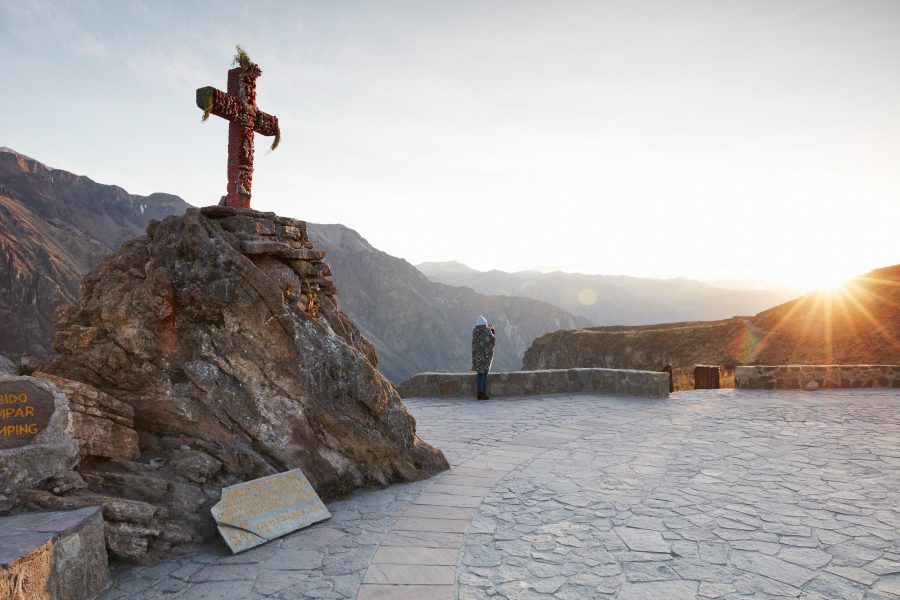
Winding in places, the route takes me through villages and scenic landscapes to the viewing point.
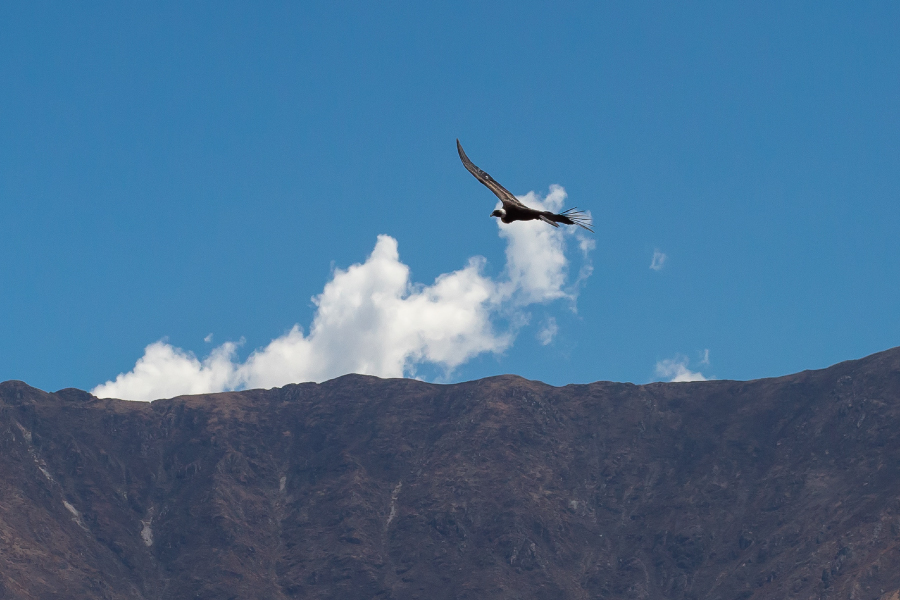
With growing excitement, I wait for the moment when the condors will make their appearance. And then, like guardians of these heights, I see them arrive, gliding with their enormous, outstretched wings—which can measure up to 3 meters—in a unique natural spectacle.
Discover the wonders Peru has to offer your travelers.
See suggested itinerary